
There was a time when buyers were frustrated by a lack of inventory and sellers could list a home on Thursday and review multiple offers by Sunday evening. Now, many people are experiencing a different kind of stress. Too many options, too much noise, too much conflicting advice, and too many questions.
For buyers, inventory overwhelm can make the process feel exhausting. One week there are only a few homes worth touring. The next week, dozens of homes hit the market at once. Every property starts blending together. Buyers second guess decisions, hesitate too long, or become emotionally drained trying to compare neighborhoods, price points, layouts, and long-term value.
For sellers, inventory overwhelm creates a different pressure. More homes on the market means more competition. Buyers are taking longer to decide. They are comparing finishes, pricing, maintenance history, location perks, school districts, and even how homes feel emotionally when they walk through the door. Sellers who rely on outdated expectations often feel discouraged when their home does not receive immediate offers.
Inventory itself is not the problem.
The real challenge is navigating the volume of choices, expectations, and emotions without losing sight of strategy.
At The Gresham Group, we see firsthand how overwhelming the process can become for both sides. Buyers are trying to filter through endless listings while balancing budgets, interest rates, family needs, and timing. Sellers are trying to stand out in a crowded market while making sure they maximize value without sitting too long.
The key is not reacting emotionally to the market. The key is understanding how to move through it with clarity.
Why Buyers Feel Stuck Right Now
Buyers are entering the market more informed than ever before. They are researching neighborhoods late at night, comparing mortgage calculators, saving homes on apps, watching market updates online, and asking friends and family for advice.
The problem is that more information does not always create more confidence.
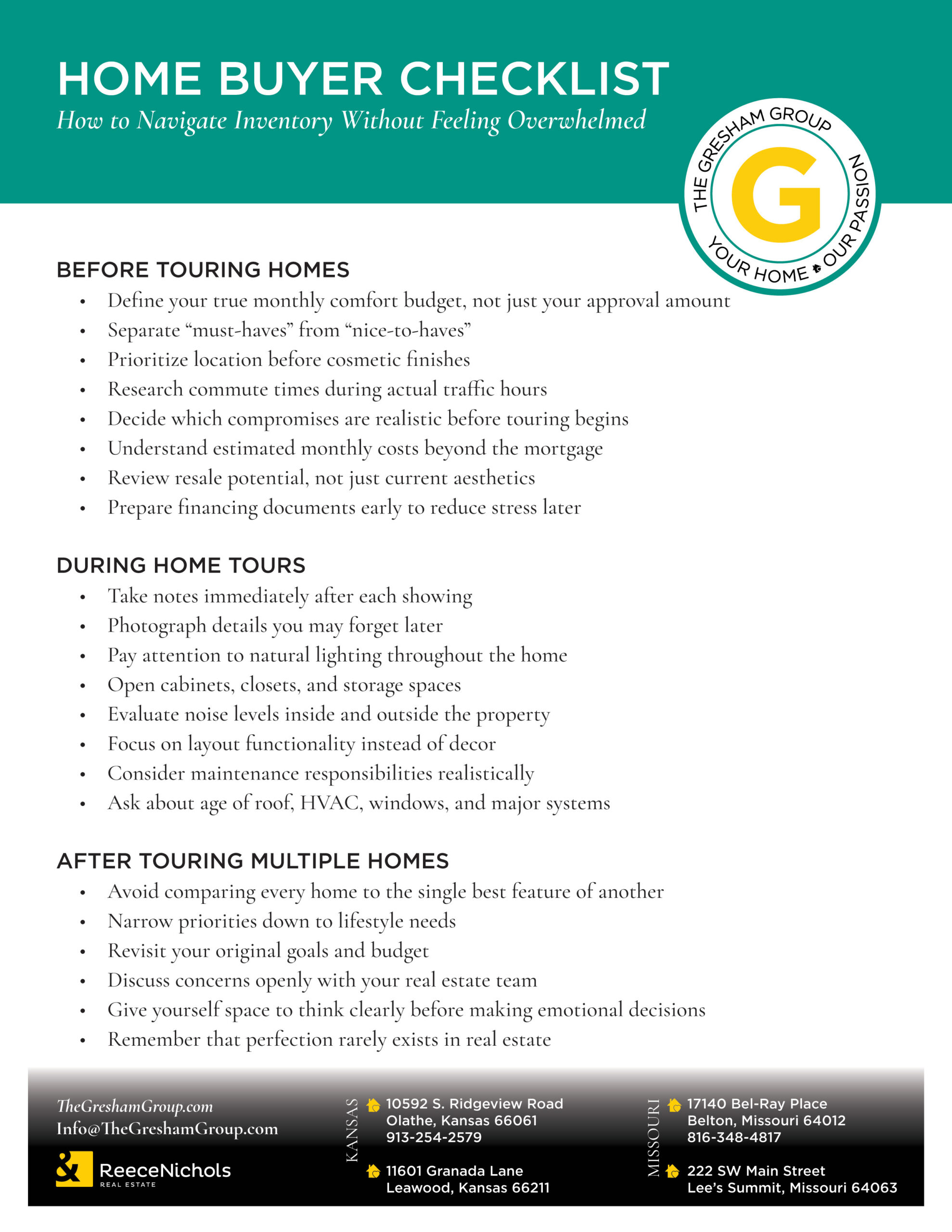
Many buyers start their search believing they will instantly know when they find “the one.” Instead, they end up looking at dozens of homes that partially fit their criteria. One home has the perfect kitchen but no backyard. Another has the ideal location but needs major updates. Another fits the budget but feels too small.
After touring enough homes, buyers often experience decision fatigue and start comparing every home to the best feature of the last five homes they toured. They become afraid of making the wrong decision and then…they hesitate.
A home they loved goes under contract.
Inventory overwhelm also causes buyers to lose perspective on what truly matters long term. Cosmetic details begin overshadowing layout, resale value, location, school district strength, commute times, or structural quality like a trendy paint color can be changed and a dysfunctional floor plan usually cannot.
This is where experienced guidance matters.
A strong real estate team helps buyers filter through distractions and focus on what supports their lifestyle, future goals, and financial comfort.
Buyers Are Not Just Purchasing a Home
They are purchasing:
- Daily routines
- Commute experiences
- Weekend lifestyles
- Future flexibility
- Emotional comfort
- Long-term investment potential
- Family gathering spaces
- Storage solutions
- Neighborhood energy
- Future resale appeal
When buyers only focus on surface-level details, they often miss the bigger picture. The right home is rarely perfect in every category. The right home is the one that supports the way you want to live.
The Hidden Pressure Sellers Are Feeling
Sellers are navigating a completely different emotional experience.
Some sellers still remember hearing stories about homes selling immediately with waived inspections and bidding wars. They expect similar results because they assume demand alone guarantees success.
But, buyers have become more selective.
More inventory creates more comparison. Comparison creates hesitation.
That means sellers must think beyond simply listing a property.
Today’s sellers need to understand how buyers emotionally experience a home.
A buyer walking into a property is subconsciously evaluating:
- Does this feel clean and maintained?
- Does this home feel bright or dark?
- Does the layout feel functional?
- Will I immediately need expensive updates?
- Does this home feel peaceful?
- Can I imagine hosting family and friends here?
- Does this feel worth the asking price compared to other homes I toured?
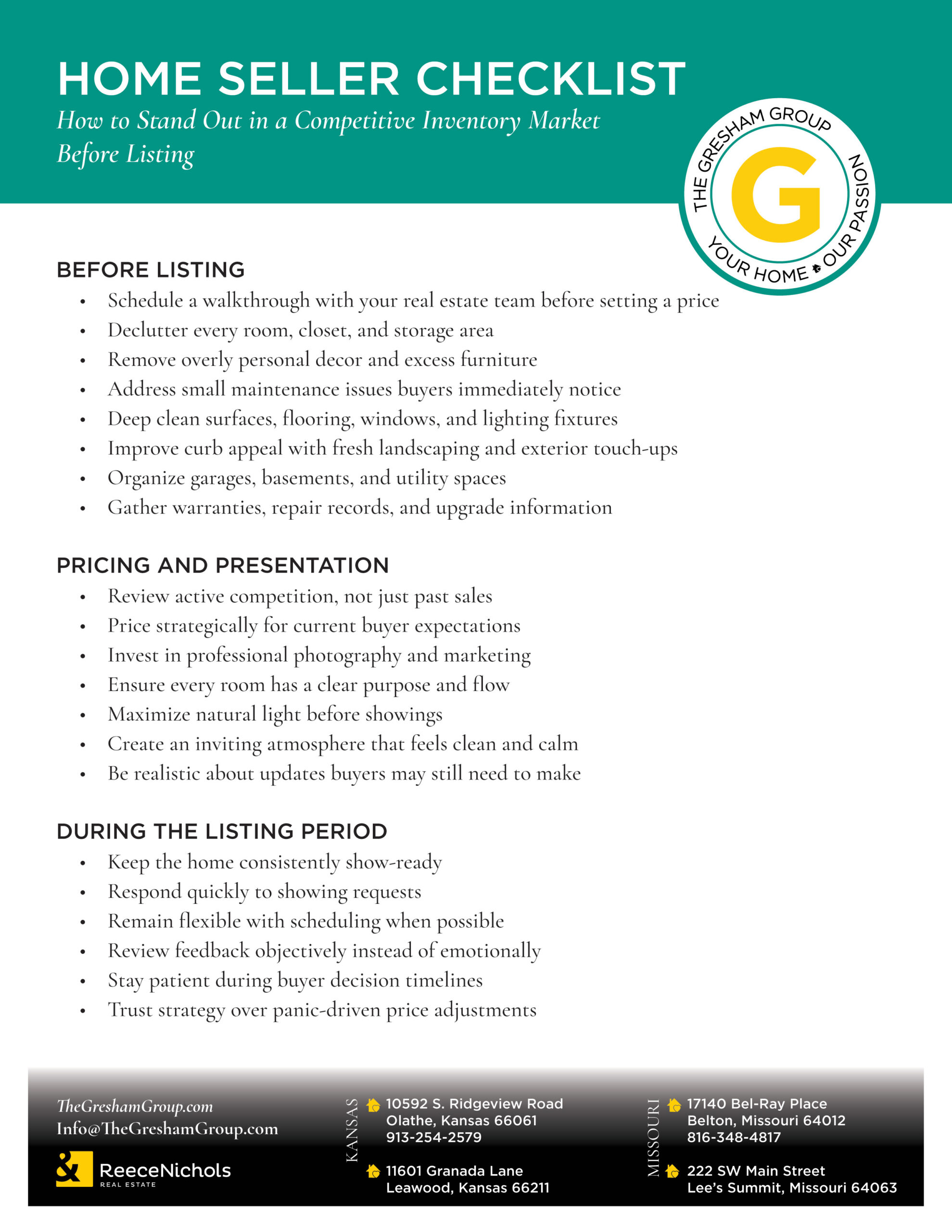
Small details matter more when buyers have more choices like a cluttered room feels smaller and poor lighting makes homes feel tired.
An unrealistic price immediately pushes buyers toward competing listings.
Inventory overwhelm forces sellers to compete not just on price, but on presentation, preparation, and perception.
Pricing Emotionally vs. Pricing Strategically
One of the biggest mistakes sellers make during periods of increased inventory is pricing emotionally.
They price based on:
- what they hope to make
- what a neighbor sold for months ago
- upgrades they personally love.
But, buyers do not evaluate homes emotionally in the same way sellers do. Buyers compare current listings side by side. If a home is overpriced compared to nearby competition, buyers notice immediately. The longer a home sits on the market, the more buyers start wondering what is wrong with it.
Strategic pricing creates momentum and that inevitably creates showings, competitions, and offers. The goal is not simply listing high and hoping. The goal is creating enough market interest to position the home competitively from the beginning.
What Inventory Overwhelm Actually Teaches Buyers and Sellers
The current environment is forcing everyone to become more intentional.
- Buyers can no longer rely on emotional impulse alone.
- Sellers can no longer rely on market hype alone.
That is not necessarily a bad thing. It creates opportunities for smarter decisions.
Buyers who stay focused and prepared often negotiate better terms, explore neighborhoods more carefully, and purchase homes that genuinely fit their long-term goals.
Sellers who invest in preparation, pricing, staging, repairs, and marketing often stand out significantly from surrounding competition.
The Emotional Side of Real Estate Decisions
Real estate is deeply personal. People are not simply buying or selling square footage, they are navigating life transitions, growing families, empty nesting, relocations, career changes, divorce, marriage, retirement, financial growth, or just a fresh start.
Inventory overwhelm amplifies emotions because every decision suddenly feels larger. That is why having the right guidance matters. An experienced team does more than unlock doors or put a sign in the yard. They help create clarity when emotions, timing, and market conditions start colliding.
At The Gresham Group, we help buyers and sellers move through uncertainty with strategy, preparation, communication, and realistic expectations because successful real estate decisions are rarely about chasing the market. They are about understanding how to move confidently within it.