

Halloween may be the season for ghosts, haunted houses and things that go bump in the night. When you are selling a home, however, the things that scare buyers away are usually much less dramatic.
A questionable repair. A price that feels too high. A house that is difficult to show. A basement that smells damp. A beautiful kitchen paired with an obviously aging roof. One problem rarely tells the whole story, but several small concerns can start to create a bigger feeling that something is wrong.
Buyers are paying close attention because purchasing a home is a significant financial decision. They are looking at the condition of the property, but they are also trying to understand what ownership will feel like after they get the keys. A home that creates too many questions can lose momentum quickly.
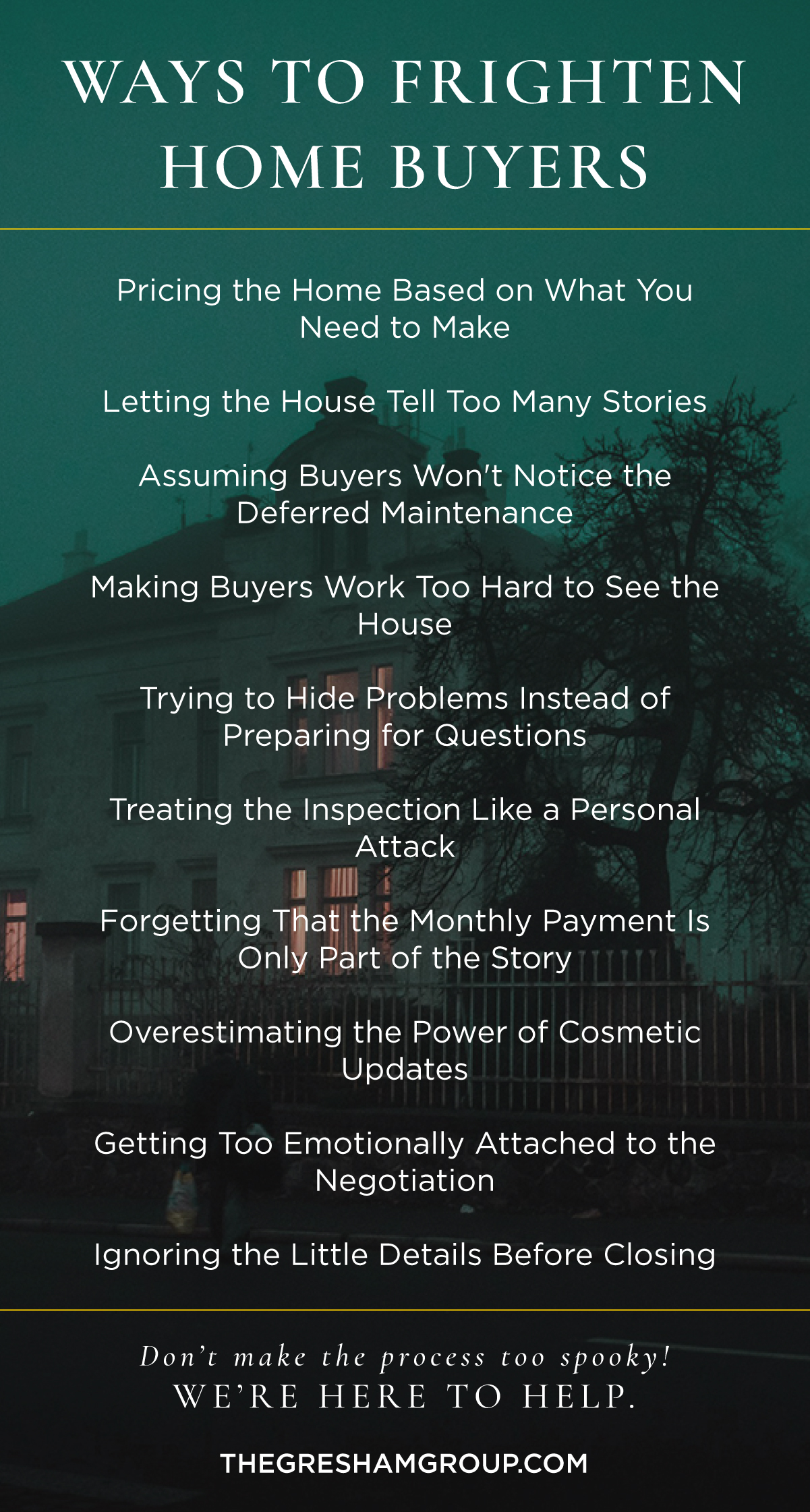
Here are some of the most common real estate mistakes that can make buyers hesitate, reconsider or walk away.
1. Pricing the Home Based on What You Need to Make
One of the hardest parts of selling a home is separating your financial goals from the value the market places on the property.
Your mortgage balance, the amount you paid for the home, the renovations you completed and the price you hope to walk away with all matter to you. They do not determine what a buyer is willing to pay.
Buyers are looking at comparable homes, condition, location, competition and the overall value they see in the property. If your home is priced significantly above what buyers believe it is worth, you may not get the strong interest you expected. Worse, the listing can begin to sit while buyers wonder what they are missing.
A thoughtful pricing strategy should take into account recent comparable sales, current competition, the home’s condition and how buyers are likely to perceive the property when they first see it.
The goal is not simply to put a number on the house. It is to position the home so buyers understand the value.
2. Letting the House Tell Too Many Stories
Buyers need to be able to picture themselves living in the home.
That becomes difficult when every room is packed with furniture, personal belongings, collections, photographs and decor. A buyer may spend more time noticing everything that belongs to the current homeowner than noticing the size of the room, the natural light or the possibilities for the space.
You do not have to make your home look sterile. You do want to create enough visual breathing room that buyers can understand how the home functions.
Decluttering, editing furniture and simplifying decor can make rooms feel larger and help important features stand out. It can also make photography much more effective, which matters because the first showing often happens online.
3. Assuming Buyers Won’t Notice the Deferred Maintenance
Buyers notice more than sellers sometimes expect.
A loose handrail. A stained ceiling. Peeling exterior paint. A dripping faucet. A cracked window. A deck that has clearly seen better days. None of these issues necessarily means a sale is doomed, but they can create a larger question in a buyer’s mind.
If this is what I can see, what else might I not be seeing?
That is where small maintenance issues can become expensive psychologically, even when they are inexpensive financially.
Before listing, walk through the home with a critical eye. Look at the things you have stopped noticing because you live there every day. Your real estate agent can be particularly helpful here because they are looking at the property through a buyer’s perspective.
You do not need to renovate everything. Addressing obvious maintenance concerns and being prepared to explain larger items can go a long way toward building confidence.
4. Making Buyers Work Too Hard to See the House
A great home can lose momentum when it is difficult to schedule a showing.
If appointments are consistently restricted, last-minute requests are difficult to accommodate or buyers feel like they are inconveniencing the seller by wanting to see the property, some will simply move on.
Selling a home requires a little flexibility. That does not mean you have to make your life miserable or agree to every possible request. It means working with your agent to establish a showing strategy that gives qualified buyers reasonable opportunities to see the home.
Convenience matters. A buyer who cannot get into the house may never get far enough into the process to fall in love with it.
5. Trying to Hide Problems Instead of Preparing for Questions
Every house has a history.
There may have been a repair, an insurance claim, a roof replacement, water intrusion, a foundation concern or another issue somewhere along the way. Buyers do not necessarily expect a home to be perfect. What can make them nervous is discovering information they were not expecting.
Disclosure requirements vary by location and circumstance, so sellers should work closely with their real estate professional to understand what needs to be disclosed. Beyond the legal requirements, transparency helps establish trust.
If there is a known issue, have the relevant information available. Receipts, permits, warranties, inspection reports and documentation of completed work can help tell the story.
A repaired problem with documentation can feel very different to a buyer than a problem they discover unexpectedly during the transaction.
6. Treating the Inspection Like a Personal Attack
This one can get emotional.
You have lived in the house. You have maintained it. You may have spent years taking care of it. Then an inspection report comes back with pages of recommendations, and suddenly it feels like someone is criticizing your home.
That is not what the inspection is designed to do.
A home inspection gives buyers information about the condition of the property so they can make informed decisions. The CFPB recommends getting an independent inspection promptly after choosing a home, giving buyers time to understand significant issues and address them within the terms of the contract.
Some inspection findings will be routine maintenance items. Others may be more significant. Your agent can help you understand which issues deserve attention and how to approach negotiations without letting emotions take over.
The strongest sellers understand that inspection negotiations are part of the process. They do not have to agree to every request, but they should be prepared to have a productive conversation about legitimate concerns.
7. Forgetting That the Monthly Payment Is Only Part of the Story
A buyer’s budget does not stop at the mortgage payment.
Property taxes, homeowners insurance, HOA dues, utilities, maintenance and future repairs all affect the cost of owning a home. The CFPB specifically recommends that buyers account for costs such as insurance, taxes, closing costs, repairs and home improvements when evaluating what they can afford.
That is one reason buyers may ask questions about the age of the roof, HVAC system, windows, appliances, property taxes, HOA fees or insurance history.
Sellers can make the process easier by having information available. If you know when major systems were installed or replaced, gather the records. If there is an HOA, make sure the relevant documents are accessible. If there are warranties that transfer with the property, know where they are.
Information creates confidence. Missing information creates more questions.
8. Overestimating the Power of Cosmetic Updates
A fresh coat of paint can help. New light fixtures can help. Updated landscaping can help.
But sellers can get into trouble when they spend heavily on cosmetic improvements without considering what buyers are likely to value most.
A $15,000 renovation does not automatically add $15,000 to the home’s value. Buyers may appreciate the work while still focusing on larger concerns such as the roof, HVAC system, foundation, windows, layout or overall condition.
Before starting a major project, talk with your real estate professional about the likely return and how the improvement fits into the overall positioning of the property.
Sometimes the smartest preparation is a targeted list of smaller improvements that make the home feel clean, cared for and move-in ready.
9. Getting Too Emotionally Attached to the Negotiation
Selling your home can be personal. That is understandable.
A buyer may criticize a feature you spent years loving. They may ask for a repair you do not think is necessary. They may offer less than you hoped. They may love the house but not value the same things you did.
Try not to let any one comment become the story.
Your agent’s job is to help you evaluate the offer, the terms, the buyer’s position and the broader circumstances of the sale. Price is important, but so are contingencies, timing, financing and the likelihood of reaching the closing table.
The strongest decisions usually come from looking at the entire offer rather than reacting to one number or one comment.
10. Ignoring the Little Details Before Closing
The home may be under contract, but the job is not finished.
Buyers are still paying attention. They may complete a final walkthrough, review documents and confirm that agreed-upon repairs or items are handled appropriately. Closing documents also deserve careful review. The CFPB recommends checking key loan terms, costs and other details before signing and asking questions about anything that does not look right.
For sellers, that means following through on agreed repairs, keeping the property in the expected condition and communicating quickly when something changes.
The final stretch should feel organized and predictable. Surprises at the finish line are rarely welcome.
The Biggest Real Estate Mistake? Giving Buyers a Reason to Doubt the Home
No home is perfect. Buyers understand that.
What makes a property feel risky is often the accumulation of unanswered questions. When buyers see deferred maintenance, confusing information, limited access, questionable pricing and unexpected problems all at once, they may start wondering what else could be waiting for them.
That is why preparing a home for sale is about more than making it look good in photos.
It is about creating confidence.
A well-prepared home gives buyers a clear understanding of what they are considering, what has been maintained, what has been improved and what they can expect as they move through the process. That confidence can make a meaningful difference when it is time for a buyer to decide whether to write an offer.
Selling a home does not require making it flawless. It requires understanding how buyers are likely to experience it and addressing the things that could create unnecessary hesitation.
And if you are wondering whether your home has a few buyer-frightening surprises hiding in plain sight, that is exactly the kind of conversation your real estate agent should be having with you before the listing goes live.