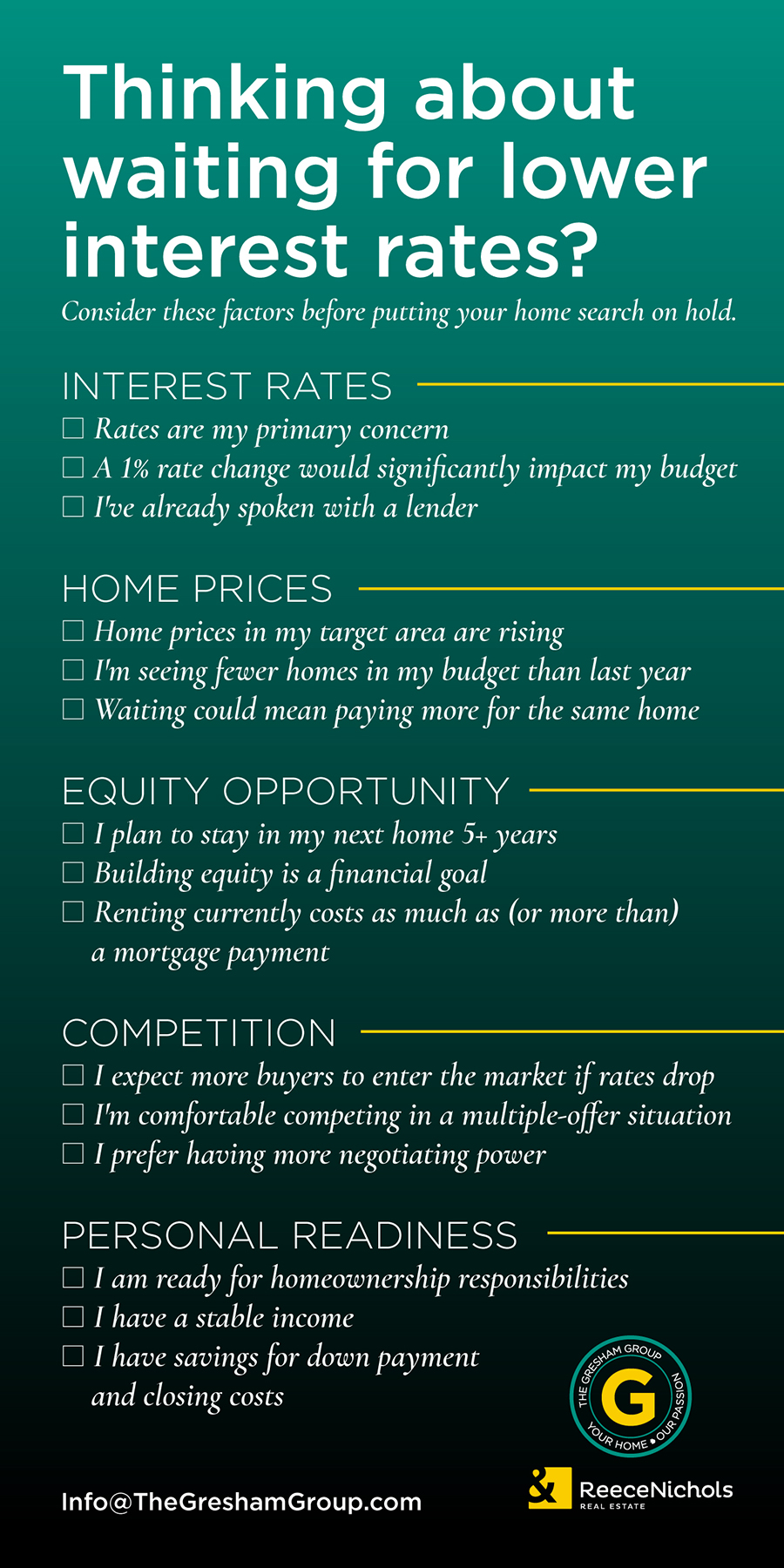

If you’ve been thinking about buying a home, chances are you’ve said it, heard it, or seen it online:
“I’m just waiting for interest rates to come down.”
It’s a reasonable thought. Mortgage rates play a significant role in affordability, and even a small change can impact a monthly payment. But focusing solely on interest rates can cause buyers to overlook a much bigger financial picture.
The reality is that timing the housing market is just as difficult as timing the stock market. No one knows exactly when rates will change, how much they will change, or how home prices will respond when they do.
What buyers can do is evaluate the true cost of waiting.
When rates eventually decrease, more buyers often re-enter the market. Increased demand can create more competition, multiple-offer situations, and upward pressure on home prices. A lower interest rate may reduce the cost of borrowing, but a higher purchase price can offset some or all of those savings.
For example, a buyer purchasing a $350,000 home today may secure a higher rate than they hoped for. However, if that same home appreciates in value over the next year and sells for $375,000, the buyer who waited could end up financing a larger loan amount, even if rates improve slightly.
There is also the opportunity cost of delayed equity growth. Every mortgage payment contributes toward ownership, and over time, homeowners benefit from appreciation and principal reduction. Rent payments, while necessary, do not build equity in the same way.
Of course, buying a home is not simply a math equation. Life circumstances matter. Job stability, savings, monthly budget, and long-term goals should always be part of the decision. Purchasing a home before you’re financially prepared rarely makes sense.
The question isn’t whether rates will eventually change. They will.
The better question is whether waiting aligns with your personal goals and financial situation.
For some buyers, waiting may be the right choice. For others, the cost of postponing homeownership could be greater than they realize.
If you’re unsure how today’s rates compare to your long-term opportunities, consider looking beyond the monthly payment. A conversation about overall affordability, equity potential, and market conditions may provide a clearer picture than headlines alone.
The perfect interest rate may never arrive. The right home, however, might already be on the market.