

July has a way of making homeowners second guess their timing. Summer vacations are in full swing, back-to-school commercials have started appearing, and many sellers wonder if they missed their opportunity to list. The truth is, the summer selling season is far from over. Buyers are still searching, families are still relocating, and many people are actively trying to move before cooler weather and holiday schedules arrive.
What changes this time of year is not demand. It is buyer behavior. Summer buyers tend to move with more purpose. They often have deadlines tied to school calendars, job relocations, lease expirations, or personal timelines. They may have already spent months searching and are ready to make decisions quickly when the right home appears. That urgency creates opportunity for sellers who position their homes strategically.
One of the biggest misconceptions about summer selling is that lowering your price is the fastest path to attracting attention. Price matters, but strategy matters more. Protecting your price point while remaining competitive requires preparation, presentation, and patience.
The Difference Between Listing and Launching
There is a difference between putting a home on the market and launching it correctly. Homes that generate excitement early often create stronger showing activity and more urgency among buyers. That momentum usually starts before the first showing ever happens.
Professional photography, thoughtful staging, strategic pricing, and creating a smooth showing experience all influence buyer perception. When homes linger too long, buyers start asking questions. When homes arrive prepared, buyers focus on possibilities.
Launching your home means thinking about the first two weeks before you think about the next two months.
Pricing Without Chasing the Market
Pricing is where emotions tend to show up. Sellers naturally want to maximize value, especially when neighbors may have sold for strong prices earlier in the year. The challenge is that buyers compare homes in real time.
Pricing too aggressively often creates a cycle sellers want to avoid. Fewer showings lead to fewer offers. Fewer offers create price reductions. Multiple reductions create buyer hesitation. Suddenly, a home that could have sold quickly now feels stale.
Competitive pricing is not about leaving money behind. It is about creating enough buyer confidence to generate activity while maintaining negotiating power. A home priced correctly from the beginning often protects value better than a home chasing the market with multiple adjustments.
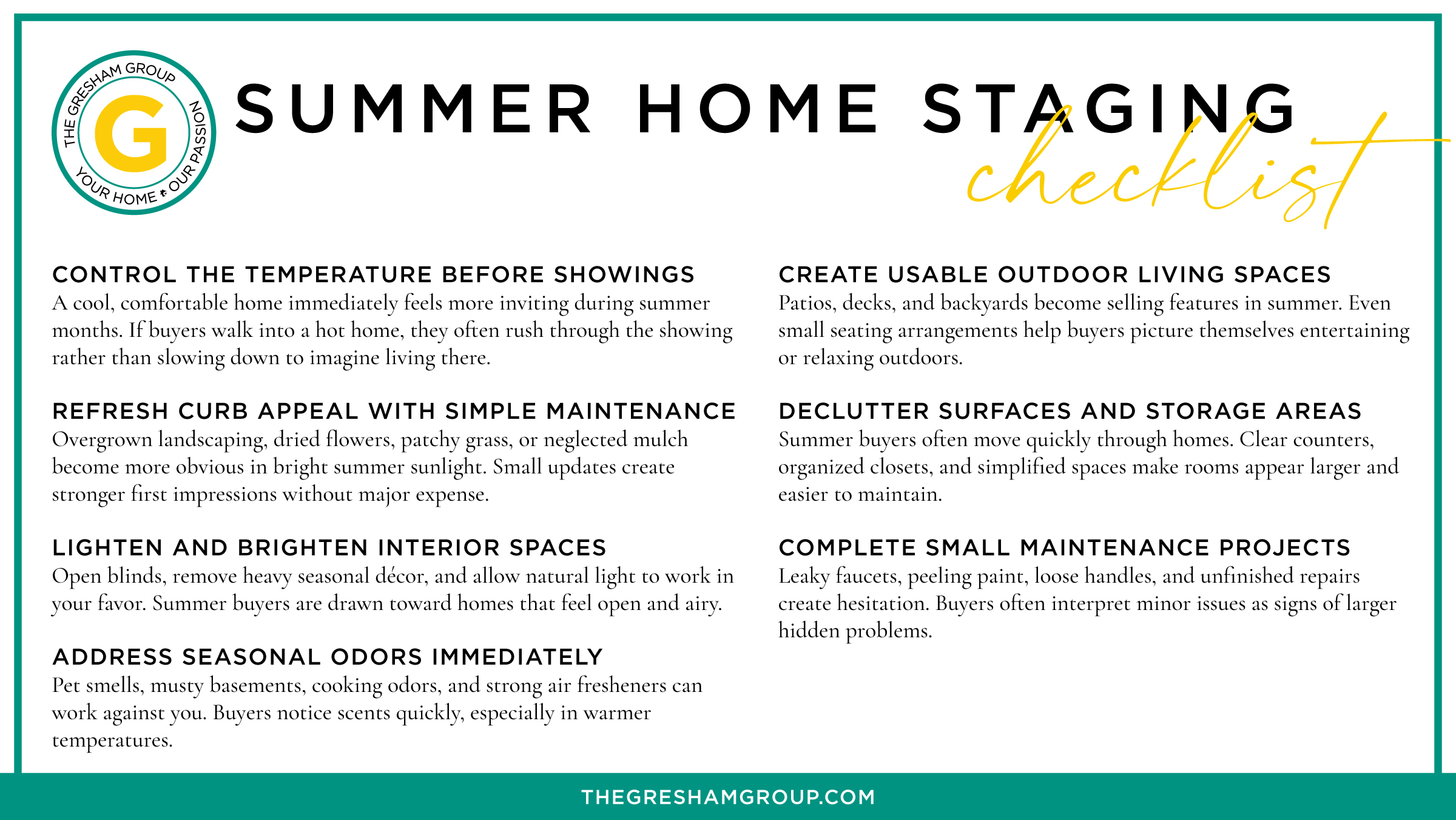
Signs Your Home Is Summer-Ready
Before listing, ask yourself a few important questions:
- Would buyers describe my home as move-in ready? Small maintenance projects become larger concerns in a buyer’s mind when temperatures are high and schedules feel rushed.
- Does my home photograph well during bright summer daylight? Harsh sunlight can expose clutter, worn landscaping, and darker rooms.
- Would someone feel comfortable staying for twenty minutes during a showing? Temperature, smells, and airflow influence how long buyers spend in a home.
- Am I prepared for flexible showing times? Summer schedules are unpredictable. Accessibility matters.
Summer selling is still happening every day. Buyers have not disappeared. They have simply become more selective with their time, attention, and money. Summer sellers are usually not the ones who panic, but are the ones who prepare, position their homes carefully, and create an experience buyers remember.
If moving before fall is the goal, the calendar has not run out. There is still time to make your move without letting your listing sit until Halloween decorations become part of the curb appeal.
Bonus: Protect Your Price Checklist
□ Review comparable sales from the last 30 to 60 days instead of relying on older neighborhood sales.
□ Complete minor repairs before photos are scheduled.
□ Prepare for showing flexibility, including evenings and weekends.
□ Decide ahead of time what repairs, concessions, or negotiations feel reasonable.
□ Invest in professional photos instead of relying on phone images.
□ Create a move-out timeline before receiving offers.