
Spring gets plenty of attention when it comes to real estate, but waiting for the traditional selling season is not always the only smart strategy. Fall and winter can offer sellers some overlooked advantages, including fewer competing listings, more intentional buyers and an opportunity for a well-prepared home to stand out.
The key is preparation. Sellers should focus on the details buyers notice when a home is competing for attention: clean windows, working lights, tidy storage, fresh smells, maintained landscaping and small repairs that can make a home feel cared for. Fall and winter also provide an opportunity to embrace the season rather than trying to make a home look like spring. Warm, welcoming spaces, natural light, fireplaces and comfortable gathering areas can all become part of the story.
And buyers have not missed their chance either. People continue to move throughout the year, often because of work, family, school or other personal circumstances. A seasonal shift can bring new listings and motivated sellers, creating opportunities for buyers who are prepared to act.
The biggest secret? There is no universal “best” month to buy or sell. The right timing depends on the home, the seller, the buyer and the strategy behind the move.
Want the full list of fall and winter selling secrets? Read the complete blog.

The House You Almost Didn’t See
The House You Almost Didn’t See: Why Buyers Should Look Past the Listing Photos You know the feeling. You are scrolling through home listings, looking at photo after photo, and suddenly one appears that makes you stop.
Not in a good way.
The furniture is dated. The paint color is not your style. The rooms look dark. The kitchen looks like it has not been updated since you were born. Maybe the listing photo of the backyard is less than inspiring.
So you keep scrolling.
But what if you just passed up a home that could have been a great fit?
One of the hardest parts of buying a home is learning to separate what you do not like about the house from what you do not like about how the house is currently presented. Those are two very different things.
The Internet Is Not the House
Listing photos are an important part of the home search, but they are still just photographs. Lighting, camera angles, furniture, clutter and even the time of day can dramatically change how a space appears.
A small-looking living room may feel perfectly comfortable in person. A dated kitchen may have a layout you love and finishes that could be changed over time. A bedroom painted a color you would never choose might actually have great natural light, generous closet space and the perfect location for your child’s room.
And sometimes a room simply photographs badly.
That does not mean you should ignore obvious issues or convince yourself that every home is secretly a gem. It means you should learn to recognize which details are permanent and which ones are changeable.
Learn to See the Bones
When you are touring a home, try to look past the cosmetic details and pay attention to the things that are much harder, and more expensive, to change.
Look at the floor plan. Does the home flow in a way that works for your family? Is there enough space where you need it? Could you see yourself using the rooms the way they are intended, or would you immediately start knocking down walls?
Look at the natural light.
- Where does the sun come in?
- Which rooms feel bright during the day? Does the home have the type of light you prefer?
Look at the location of the major systems and features.
- Where are the bedrooms?
- Where is the laundry?
- How does the kitchen connect to the living areas?
- Is there enough storage?
- How does the garage connect to the house?
- Is the backyard functional?
Those details can be much more important to your long-term satisfaction than whether you like the backsplash.
Learn the Difference Between “Ugly” and “Expensive”
This is one of the most useful distinctions a buyer can make.
Ugly can often be changed. Expensive can require a very different conversation.
A paint color you hate may be inexpensive to change. So might a light fixture, cabinet hardware, carpet, bathroom mirror or landscaping.
A floor plan that does not work for your family is another story.
The same goes for major structural concerns, significant foundation issues, a location that does not fit your lifestyle or a home that simply does not have enough space for what you need.
When touring a home, ask yourself:
- Do I dislike this, or do I need to fix this? Then ask a second question:
If I needed to fix it, would it actually be worth it?
That shift can help you avoid both extremes. You do not want to dismiss a wonderful home because the countertops are dated. You also do not want to fall in love with a cosmetic makeover that distracts you from problems that matter much more.


Your Home Has a Story. Is Your Listing Telling It?
A home can have beautiful countertops, a new roof, hardwood floors and a backyard that would make any buyer happy.
But buyers rarely fall in love with a list of features. They fall in love with the life they can imagine having there.
That is why selling a home involves more than making sure the details are accurate. The listing needs to help buyers understand what makes the home special and, more importantly, what it might feel like to live there.
Every home has a story.
The question is whether your marketing is telling it.
Features Tell Buyers What the Home Has
Every listing needs the basics. Bedrooms. Bathrooms. Square footage. Garage spaces. Lot size. Updates. School information. Location. Those details matter because buyers need to understand what they are considering.
Features alone do not necessarily create an emotional connection.
Consider a kitchen with a large island. That is a feature.
But, a kitchen where everyone gathers for breakfast before school, friends sit around the island during dinner parties and there is enough room for homework while dinner is being made?
Now you are telling a story.
The backyard is another example.
“Large fenced yard” is useful information. But, a private backyard with room for the kids to play, the dog to run and a patio that makes summer dinners easy gives a buyer something to imagine.
The best marketing connects the two.
Start With the Way the Home Lives
Before your home is listed, think about how you actually use it.
- Where does everyone gather?
- What room do you spend the most time in?
- What feature made you fall in love with the house when you bought it?
- What do your friends compliment?
- What is easier about your life because of where the home is located?
Maybe it is the mudroom that saves your family from a mountain of shoes and backpacks. Maybe it is the screened porch where you spend summer evenings. Maybe it is the basement where teenagers disappear with friends. Maybe it is the main-floor office that made working from home much easier. Maybe it is being able to walk to a neighborhood park.
Those details can be powerful because they help buyers picture themselves in the space.


Your Home Does Not Have to Appeal to Everyone
One of the biggest mistakes sellers can make is trying to make their home sound like it is perfect for absolutely everyone. It is not. And it does not need to be.
A home with a finished basement may be especially appealing to a family looking for flexible space. A home with a first-floor primary suite could be ideal for buyers planning ahead. A low-maintenance yard may appeal to someone who would rather spend weekends doing anything other than mowing.
The goal is not to convince every buyer that your home is their dream home. The goal is to help the **right** buyer recognize why it could be.
That means identifying the lifestyle your home naturally supports and making sure your marketing brings those qualities forward.
Think About What Happens After the Showing
A buyer may see ten homes over the course of a weekend. By the time they get home, individual details can start to blur together.
That is why the story matters.
Maybe one home had a great kitchen. Another had a beautiful primary suite. But, your home was the one they could picture their family living in.
That is the difference between presenting a property and positioning a home.
When it is time to sell, your job is not to recreate your life for the next owner. It is to help them see how their life could fit there.
Your home already has a story.
Make sure your listing tells it.
Out with the Old, In with the Cozy
Hosting season is soon upon us and we want you to easily find your décor as switching seasons can be a bit stressful! Swapping out the summer clutter for warm layers and streamlined spaces. Add these items to the cart:

Festive Fever
Oh my gourd. We just can’t hide the excitement for unique fall festivals around Kansas City. Came for the festive vibes, stayed for the baked goods. Check these out!
Kansas City Oktoberfest
Downtown Lee’s Summit, MO
September 25-27
German food, a Biergarten, and live entertainment.
OP Fall Festival
Downtown Overland Park, KS
September 25-26
Hands-on activities, live entertainment, and vendors.
Shawnee Indian Mission Festival
Fairway, KS
October 10
Historical interpreters and Native American artists.

The 30-Minute Fall Home Reset
You do not need to dedicate an entire weekend to getting your home ready for fall.
You probably do not even want to.
The change of seasons is a good reminder to take a quick lap around the house, take care of a few small tasks and make sure the home is ready for cooler temperatures and more time indoors.
Set a timer for 30 minutes and tackle what you can.
• 10 Minutes Outside
Walk around the exterior of your home and look at it with fresh eyes.
Clear leaves and debris from entrances, steps and walkways. Check that exterior lights are working before the days get shorter. Look for branches that may need trimming, gutters that are filling with leaves or areas where water does not seem to be draining properly.
Take a quick look at outdoor furniture and summer equipment, too. Anything that will not be used again until spring can be cleaned and stored now instead of becoming one more thing to deal with later.
• 10 Minutes Inside
Head indoors and focus on the systems that help keep your home comfortable.
Replace or check the HVAC filter. Make sure vents and registers are not blocked by furniture or rugs. Test smoke and carbon monoxide detectors and replace batteries if needed.
Take a look around windows and doors, too. If you notice a draft, make a note to address it before the coldest days arrive.
This is also a good time to check your thermostat and make sure it is ready for the seasonal switch.
• 10 Minutes in the Garage, Basement or Storage Area
Fall has a sneaky way of turning storage spaces into chaos.
Put away the last of the summer equipment. Pull out what you will actually need over the next few months. Make sure winter essentials are easy to reach rather than buried behind beach chairs, pool toys and gardening supplies.
You do not need to organize every shelf.
Just make the next season easier to access.
The Bonus Five-Minute Check
If you have a few extra minutes, look at the places you tend to ignore. Check under sinks for leaks. Look at the ceiling around vents and plumbing fixtures for anything unusual. Make sure the fireplace area is clean if you use it. Look at the garage door and make sure it is operating properly.
A 30-minute reset can help you catch small problems while they are still small, make your home more comfortable and make the transition into fall a little easier.


Building Your Financial Foundation For Home Ownership
Ready to make homeownership a goal? Start with your finances.
Before you start touring homes, take a clear look at your income, expenses, debts and credit. A realistic budget can help you understand what you can comfortably afford and identify opportunities to put more toward your home savings.
Start saving early. You don’t necessarily need 20% down to buy a home. Depending on your situation, there are loan programs and assistance options that may allow for a much smaller down payment. Automatic transfers into a dedicated savings account can make building that fund easier.
And remember, your monthly housing budget includes more than the mortgage. Property taxes, insurance, utilities, maintenance and HOA fees can all factor into the true cost of owning a home. An emergency fund can also give you a cushion when those inevitable homeownership surprises come along.
As you prepare, focus on reducing high-interest debt, maintaining steady employment and avoiding major purchases that could affect your financial picture. Then, when you’re ready, mortgage pre-approval can give you a clearer idea of your purchasing power and strengthen your position when it’s time to make an offer.
The best home search starts before you ever walk through the front door. With thoughtful financial preparation and the right guidance, you can approach the process with greater confidence and a clearer understanding of what fits your goals.
Negotiation Mistakes That Can Cost You
Buying a home is one of the biggest financial decisions you’ll make, so going into negotiations unprepared can be costly. The strongest negotiations start long before an offer is submitted.
- Start with the data. Rather than choosing an offer price based solely on the listing, look at recent comparable sales, current market conditions and the home’s condition. Your offer should reflect what the home is worth, not simply what the seller is asking.
- Know your financial position. Mortgage pre-approval demonstrates that you’re a serious buyer and helps you understand your purchasing power. It can also make your offer more competitive when you’re up against other buyers.
- Adapt your strategy to the market. A competitive seller’s market may require a different approach than a market where buyers have more negotiating room. And remember, negotiations aren’t always about price. Closing dates, contingencies and seller concessions can all be part of the conversation.
- Most importantly, keep emotion in check. It’s easy to become attached to a home, but being willing to walk away can protect both your budget and your negotiating position.
The Gresham Group combines local market knowledge with thoughtful negotiation strategies to help you understand your options, avoid costly missteps and move forward with confidence.
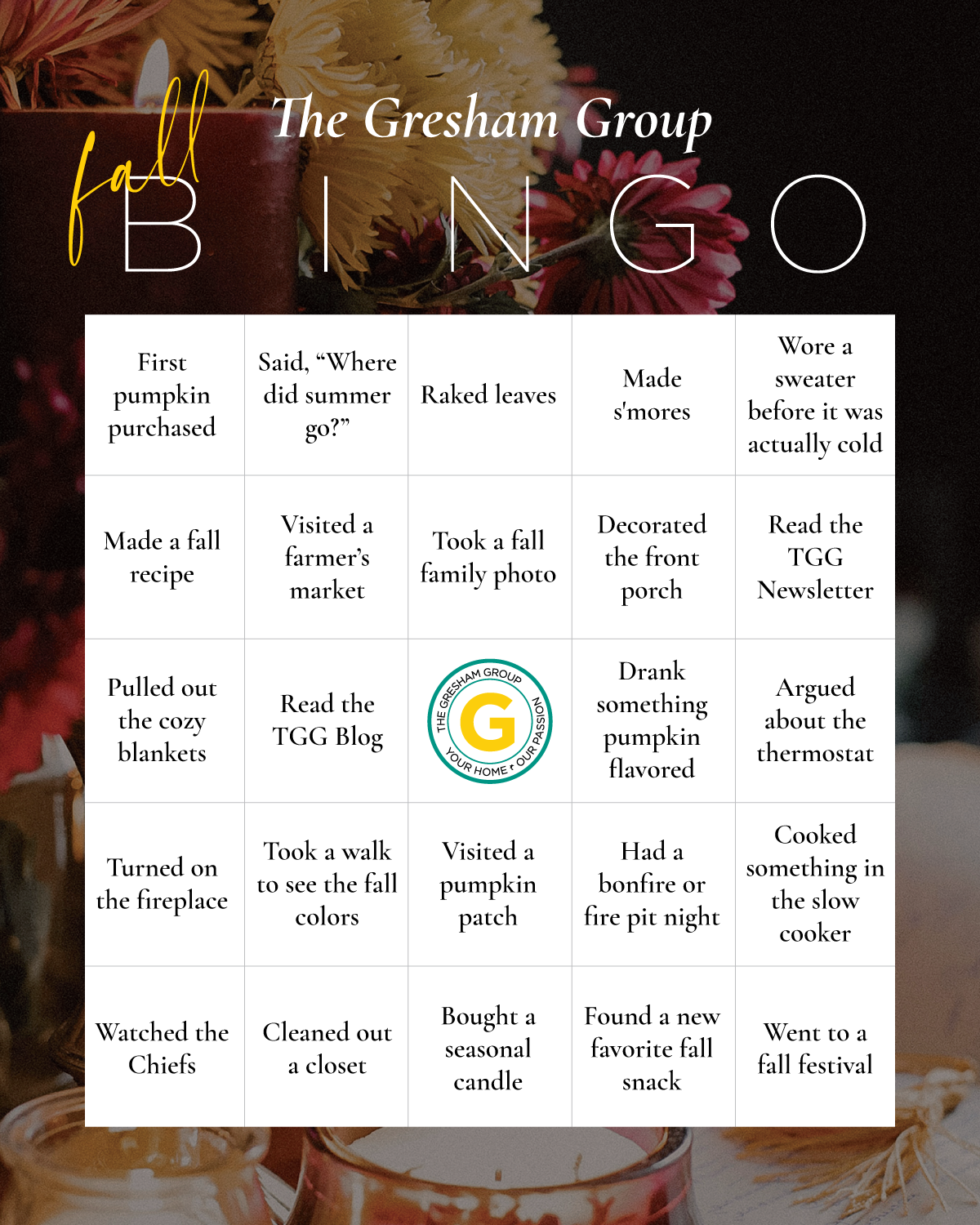
Fall is officially here and homeowners everywhere are entering the season of cozy blankets, football Saturdays, changing leaves and wondering why the thermostat suddenly became a family negotiation.
So we made it a game. Play along with us!!
Client Testimonials










WORK WITH US
Buying and selling a house is an emotional process. Our agents are here to be your trusted advisor and lifelong friend. We’re dedicated to the people of Kansas and Missouri and believe everyone should be able to find home.
Get In Touch